
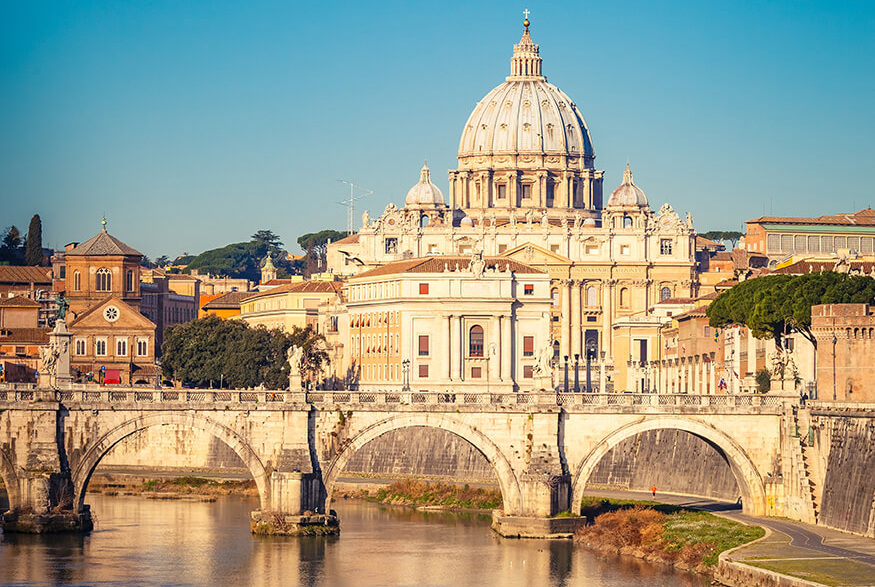
Why Choose a Guided Tour of the Vatican Museums
The Vatican Museums house over 70,000 works spanning 5,000 years of human creativity. Walking through these galleries without context means missing the stories that make each piece significant. A guided tour transforms your visit from passive observation into active discovery.
Expert Vatican guides bring art history degrees, years of specialized training, and genuine passion for their subject. They don't just point at paintings—they decode symbolism, reveal hidden details, and connect disparate works into a coherent narrative of Western civilization.
Beyond expertise, guided tours provide practical advantages. All tours include skip-the-line access, bypassing queues that regularly exceed 2-3 hours. Guides navigate the optimal route through crowded galleries, ensuring you see highlights without wasting time at lesser works or getting lost in the seven-kilometer maze of corridors.
What You'll Miss Without a Guide
Self-guided visitors often walk through the Sistine Chapel in minutes, overwhelmed and unsure where to look. They miss that the ceiling tells a story from creation to the flood, that Michelangelo painted himself into The Last Judgment, and that the architectural elements framing the prophets are painted illusions.
In the Raphael Rooms, they see beautiful frescoes without understanding why The School of Athens revolutionized Renaissance painting, or that Raphael painted contemporary figures (including himself, Michelangelo, and Leonardo) as ancient philosophers.
Did You Know?
Michelangelo initially refused the Sistine Chapel commission, considering himself a sculptor rather than a painter. Pope Julius II essentially forced him to accept. The resulting masterpiece took four years of grueling work on scaffolding, and Michelangelo wrote poems complaining about the physical toll.
Types of Vatican Guided Tours
Tour operators offer various formats to match different preferences, budgets, and group sizes. Understanding your options helps you choose the experience that best fits your needs.
Standard Group Tours
The most accessible option, standard group tours typically include 15-25 participants led by a licensed guide. These tours run multiple times daily, offering flexibility in scheduling.
- Duration: 2.5-3 hours
- Group size: 15-25 people
- Price range: €45-65 per person
- Best for: Budget-conscious visitors, solo travelers, those wanting a social experience
Standard tours cover all major highlights using wireless headsets so you hear the guide clearly even in crowded spaces. The trade-off is less personalized attention and a fixed itinerary that may not align with your specific interests.
Small Group Tours
Limiting participants to 8-12 people, small group tours offer a middle ground between affordability and intimacy. Guides can adjust pacing based on group interest and answer more individual questions.
- Duration: 3-3.5 hours
- Group size: 8-12 people
- Price range: €70-95 per person
- Best for: Serious art enthusiasts, photographers wanting guidance, families with older children
The smaller group size means less time waiting for everyone to gather, more flexibility in the route, and a guide who remembers your name and interests. Many visitors find this the optimal balance.
Private Tours
For those wanting complete customization, private tours provide an exclusive experience with just your party and the guide. You control the pace, focus areas, and timing.
- Duration: 2-4 hours (your choice)
- Group size: 1-8 people
- Price range: €200-350 for the tour (not per person)
- Best for: Families with children, couples celebrating special occasions, art professionals, anyone with mobility considerations
Private guides tailor content to your knowledge level. A Renaissance art professor gets different commentary than first-time visitors. You can linger at works that captivate you and skip areas of lesser interest.
Money-Saving Tip
Private tour pricing is usually flat-rate, not per-person. For groups of 4 or more, private tours often cost the same or less per person as small group tours while providing a vastly superior experience.
Early Access Tours
These exclusive tours enter the Vatican Museums 60-90 minutes before general opening, when galleries are nearly empty. You'll experience the Sistine Chapel with perhaps 50 people instead of 2,000.
- Duration: 2-2.5 hours
- Group size: Usually small (8-15 people)
- Price range: €100-150 per person
- Start time: 7:30 AM (before 9 AM public opening)
- Best for: Photographers, those who hate crowds, visitors during peak season
Early access transforms the experience entirely. Without crowds, you can actually appreciate the spatial grandeur of the galleries. The Sistine Chapel feels sacred rather than chaotic. Photographs capture art without hundreds of raised smartphones.
VIP and After-Hours Tours
The ultimate Vatican experience: exclusive access to areas closed to regular visitors, or tours when the museums are entirely closed to the public.
- Duration: 2-4 hours
- Group size: Very small (6-12 people)
- Price range: €200-400 per person
- Best for: Special occasions, once-in-a-lifetime visits, serious art collectors
VIP tours may include access to the Bramante Staircase (usually off-limits), private viewing of specific collections, or exclusive evening hours. Availability is limited and advance booking is essential.
What Expert Guides Explain
Professional Vatican guides undergo rigorous certification and typically hold degrees in art history, archaeology, or related fields. Here's what their expertise illuminates:
Art Historical Context
Guides explain how Renaissance artists rediscovered classical techniques, why the Vatican became a patron of the arts, and how popes competed to commission the greatest works. You'll understand why Michelangelo and Raphael were rivals, how artistic styles evolved over centuries, and what made certain innovations revolutionary.
Iconography and Symbolism
Religious art uses a complex visual language that modern viewers rarely understand intuitively. Guides decode symbolic elements: why certain saints carry specific objects, what hand gestures signify, how colors convey theological meaning, and what biblical stories each scene depicts.
Hidden Details
Expert guides point out elements invisible to untrained eyes. In The Last Judgment, Michelangelo painted his own face on the flayed skin held by St. Bartholomew—a profound statement about artistic creation and divine judgment. In Raphael's frescoes, contemporary figures appear as ancient philosophers, embedding Renaissance politics into classical scenes.
Papal and Political History
The Vatican's art collection reflects centuries of papal politics, Church-state relations, and European power dynamics. Guides contextualize works within their historical moment: why Julius II commissioned such ambitious projects, how Counter-Reformation theology shaped later art, and what these treasures reveal about papal power.
Conservation and Restoration
Many works have undergone significant restoration. Guides explain how the Sistine Chapel ceiling looked before and after its controversial 1980s-1990s restoration, what techniques conservators used, and debates within the art world about such interventions.
Vatican Guided Tour Highlights
While itineraries vary, most Vatican guided tours cover these essential stops:
The Sistine Chapel
The climax of any Vatican visit. Michelangelo's ceiling (1508-1512) depicts nine scenes from Genesis, from the Creation to Noah's drunkenness. The famous Creation of Adam—God's finger approaching Adam's—has become one of humanity's most reproduced images.
The altar wall displays The Last Judgment (1536-1541), painted 25 years after the ceiling. This darker, more turbulent work reflects Michelangelo's evolved theology and the trauma of the 1527 Sack of Rome.
Guides prepare you outside the chapel (speaking is prohibited inside), explaining what to look for so you can appreciate the space in contemplative silence.
Raphael Rooms (Stanze di Raffaello)
Four interconnected chambers painted by Raphael and his workshop as papal apartments. The School of Athens remains the most celebrated, depicting ancient philosophers in an idealized architectural space. Plato points upward (toward ideal forms), while Aristotle gestures toward the earth (toward empirical observation).
Guides identify the Renaissance figures hidden as philosophers: Michelangelo as Heraclitus, Leonardo as Plato, Bramante as Euclid, and Raphael himself looking directly at viewers.
Gallery of Maps (Galleria delle Carte Geografiche)
This 120-meter corridor features 40 topographical maps of Italian regions, painted between 1580-1583. The stunning combination of cartographic accuracy, artistic decoration, and architectural grandeur makes this one of the museum's most photographed spaces.
Guides explain the maps' political significance—asserting papal territorial claims—and point out fascinating details like cities shown before and after earthquakes, or deliberate distortions serving aesthetic or political purposes.
Pio-Clementino Museum
The Vatican's premier collection of classical sculpture includes works that profoundly influenced Renaissance artists. The Laocoön Group, depicting the Trojan priest and his sons attacked by serpents, was rediscovered in 1506 and immediately recognized as a masterpiece.
The Apollo Belvedere and Belvedere Torso similarly shaped Renaissance ideals of the human form. Michelangelo studied the Torso intensively, and its influence appears throughout his work.
Pinacoteca (Picture Gallery)
Though less famous than the Sistine Chapel, the Pinacoteca houses major paintings by Raphael (including his last work, the Transfiguration), Caravaggio (Deposition), and Leonardo da Vinci (unfinished St. Jerome). Guides contextualize these within each artist's career and broader art historical developments.
Tour Duration and What's Typically Included
Understanding inclusions helps you compare tours effectively:
Standard 3-Hour Tour Includes:
- Skip-the-line entry tickets
- Licensed English-speaking guide
- Wireless headset (for groups)
- Vatican Museums and Sistine Chapel access
- Coverage of major highlights
Extended 4-5 Hour Tour Typically Adds:
- St. Peter's Basilica visit (separate from museums)
- St. Peter's Square history and architecture
- Optional Dome climb access
- Additional gallery time
Usually NOT Included:
- Hotel pickup/drop-off
- Lunch or refreshments
- Dome climb ticket (if offered separately)
- Audio guide rental
- Gratuities for guide
Post-Tour Access
After your guided tour ends, you retain museum access until closing time. Many visitors appreciate having a coffee in the museum café, then returning to favorite galleries at their own pace with fresh understanding from the tour.
Booking Tips and Best Times
When to Book
Reserve guided tours 2-4 weeks ahead during peak season (March-October, December holidays, Easter week). Popular time slots—especially early access tours—fill up quickly. Off-season (November, January-February) offers more flexibility, but booking at least a week ahead ensures your preferred time.
Best Times of Day
- Early morning (8:00-9:00 AM): Smaller crowds, cooler temperatures in summer. Reach the Sistine Chapel before it gets overwhelmed.
- Late afternoon (3:00-4:00 PM): Tour groups are leaving, galleries thin out. Beautiful light for photography.
- Avoid: 10 AM-1 PM when crowds peak and galleries feel congested.
Best Days to Visit
- Wednesday morning: Many visitors attend Papal Audience, reducing museum crowds.
- Tuesday and Thursday: Generally quieter than weekend days.
- Avoid: First Sunday of the month (free entry creates massive crowds), school holiday periods.
Seasonal Considerations
- Peak season (April-June, September-October): Best weather, highest crowds. Book early, arrive punctually.
- Summer (July-August): Hot and crowded. Early morning tours essential.
- Off-season (November-February): Smaller crowds, lower prices, occasional reduced hours. Excellent for unhurried visits.
Meeting Points and What to Expect
Typical Meeting Procedure
Most tours meet near the Vatican Museums entrance on Viale Vaticano—not at St. Peter's Square (that's a common mistake). Look for your tour company's sign or your guide holding a branded umbrella or flag.
Arrive 15 minutes before the scheduled start time. Guides conduct a brief orientation, distribute headsets, and lead the group to the priority entrance. After security screening, you proceed directly into the museums.
During the Tour
Tours follow a structured route, stopping at key works for explanations. Wireless headsets let you hear the guide clearly even when standing at the back of the group. You'll have brief free time at certain points—typically in the Sistine Chapel (where guides cannot speak) and at the tour's conclusion.
Good tours maintain a measured pace, allowing time to absorb information without rushing. Feel free to ask questions during transitions between galleries.
After the Tour
Tours typically end inside the museums, either in the Sistine Chapel (from which you can exit directly to St. Peter's Basilica) or near the museums' exit. Your ticket remains valid for re-entry until closing, though you cannot re-enter the Sistine Chapel once you've exited.
Practical Information for Tour Participants
Dress Code Requirements
The Vatican enforces strict dress standards:
- Shoulders must be covered (no tank tops, sleeveless shirts)
- Knees must be covered (no shorts, short skirts)
- No hats inside the Sistine Chapel
- No excessively casual attire (beach wear, torn clothing)
These rules apply equally to men and women. Security staff will refuse entry to anyone inappropriately dressed. Bring a light scarf or cardigan if wearing sleeveless clothing.
What to Bring
- Comfortable walking shoes (you'll cover significant distances on hard floors)
- Water bottle (refill stations inside)
- Light layers (temperature varies between galleries and outdoor courtyards)
- Camera (no flash photography in the Sistine Chapel)
- Valid ID (may be required for reduced-price tickets)
- Your booking confirmation (mobile or printed)
What NOT to Bring
- Large bags or backpacks (no luggage storage available)
- Tripods or selfie sticks (prohibited)
- Food or drinks (except water)
- Large umbrellas
- Sharp objects
Important: No Luggage Storage
The Vatican Museums do not provide luggage storage. If traveling with suitcases, store them at your hotel or use a luggage storage service near Termini Station before your visit.
Guided Tour vs. Audio Guide vs. Self-Guided Visit
Each approach offers distinct advantages depending on your priorities:
| Aspect | Guided Tour | Audio Guide | Self-Guided |
|---|---|---|---|
| Skip-the-line | Included | Separate purchase | Separate purchase |
| Expert commentary | Live, interactive | Pre-recorded | None (unless researched) |
| Flexibility | Set itinerary | High | Complete |
| Pace | Group pace | Your own | Your own |
| Cost (approx.) | €45-150 | €8 + entry | Entry only |
| Questions answered | Yes, in real-time | No | No |
| Hidden details | Pointed out | Selected highlights | Easily missed |
Choose a Guided Tour If:
- You want context and stories, not just looking
- Art history isn't your background
- You have limited time and want an efficient route
- You prefer learning from a live expert
- You're traveling with children who benefit from engagement
Choose an Audio Guide If:
- You prefer controlling your own pace
- You're an independent explorer
- Budget is a primary concern
- You want to revisit sections multiple times
Choose Self-Guided If:
- You have strong art history background
- You've visited before and want specific sections
- You prefer complete independence
- You're primarily photographing and don't want to keep pace
Vatican Tour Tips for the Best Experience
Before Your Tour
- Research the main works you'll see—familiarity enhances appreciation
- Eat a good breakfast; tours are physically demanding
- Check your email for any tour updates or meeting point confirmations
- Charge your phone and download any offline content
- Use the restroom before meeting—opportunities are limited once inside crowded galleries
During Your Tour
- Stay close to your guide in crowded areas
- Ask questions—guides appreciate engaged participants
- Take photos, but don't miss the real experience through your phone screen
- If something doesn't interest you, observe the architecture instead
- Save the Sistine Chapel for silent contemplation rather than continued photography
After Your Tour
- Return to galleries that particularly moved you
- Visit the cafeteria for a break before exploring further
- Consider tipping your guide if they provided exceptional service (€5-10 is customary)
- Write down memorable insights before they fade
Photography Tip
The Sistine Chapel prohibits photography to protect the frescoes and maintain reverence. However, enforcement varies. Rather than sneaking shots, focus on experiencing the space—you'll find professional images online far superior to anything you could capture in dim, crowded conditions.
Special Tour Options
Tours with St. Peter's Basilica
Extended tours add St. Peter's Basilica, entering through a special passage from the Sistine Chapel (avoiding the main basilica queue). These tours typically add 1-1.5 hours and include Michelangelo's Pietà, the Baldacchino, and papal tombs.
Vatican Gardens Tours
The 23-hectare Vatican Gardens are normally restricted but accessible via special guided tours. Combined tickets include both gardens and museums. Book at Vatican Gardens Tickets for more information.
Family-Friendly Tours
Several operators offer tours designed for children, with interactive elements, treasure hunts, and age-appropriate storytelling. These typically limit group size and include shorter routes suited to younger attention spans.
Accessibility Tours
The Vatican Museums are largely wheelchair accessible, with elevators connecting different levels. Private tours can be customized for mobility considerations, and guides can arrange wheelchair rentals in advance.
Frequently Asked Questions
Standard Vatican guided tours typically last 2.5 to 3 hours, covering the Museums and Sistine Chapel highlights. Extended tours including St. Peter's Basilica run 4-5 hours. Early access and VIP tours may be shorter (2 hours) but offer a more exclusive experience with fewer crowds.
Vatican guided tours are most commonly available in English, Italian, Spanish, French, German, and Portuguese. Some operators offer tours in Japanese, Mandarin, Russian, and other languages. Private tours can often be arranged in additional languages upon request.
Yes, all reputable Vatican guided tours include skip-the-line access. Your guide leads the group through a priority entrance, bypassing the regular admission queue which can exceed 3 hours during peak season. This is one of the major advantages of booking a guided tour over a standard entry ticket.
Small group tours typically have 8-15 participants and offer a good balance of personalized attention and value. Private tours are exclusively for your party (1-8 people), allowing a fully customized itinerary, flexible pace, and the guide's undivided attention. Private tours cost more but provide the most tailored experience.
For most visitors, yes. Guided tours provide context and stories that bring the art to life. Without a guide, many visitors walk through galleries without understanding what they're seeing. Guides point out hidden details, explain symbolism, and share fascinating history that you'd miss on a self-guided visit. The skip-the-line access alone often justifies the price difference compared to waiting 2-3 hours in line.
Yes! Your entry ticket remains valid until the museum closes. After the guided portion ends, you're free to explore independently, revisit favorite galleries, or enjoy the museum café. Note that if you exit through the Sistine Chapel door to St. Peter's Basilica, you cannot re-enter the museums.
Most tour operators cannot wait for late arrivals as they have timed entry slots. If you're running late, contact your tour operator immediately (check your confirmation email for contact details). Some may be able to redirect you to a later tour if available. Arriving 15 minutes early is strongly recommended.
Standard tours may be challenging for young children due to duration (2.5-3 hours) and content complexity. Some operators offer family-specific tours with interactive elements, shorter routes, and age-appropriate storytelling. Private tours can also be customized for families. Children under 6 enter free but still need to be registered.